Energy Use Visualisation
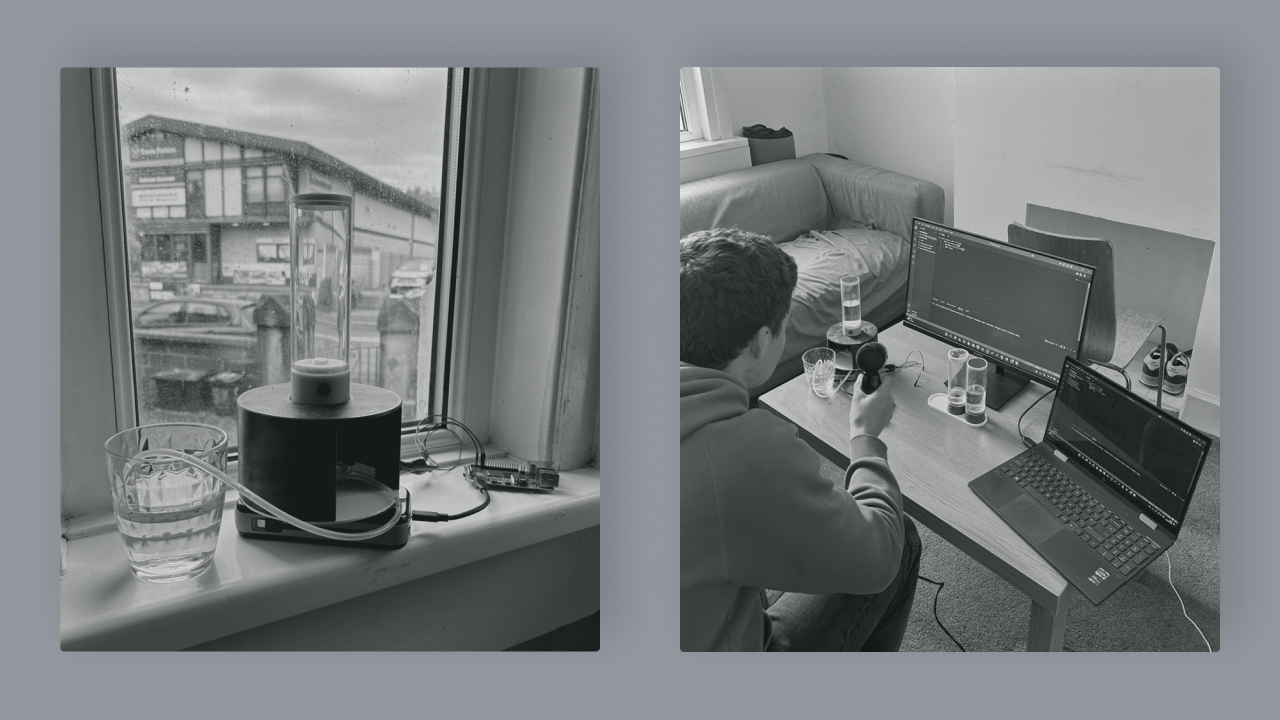
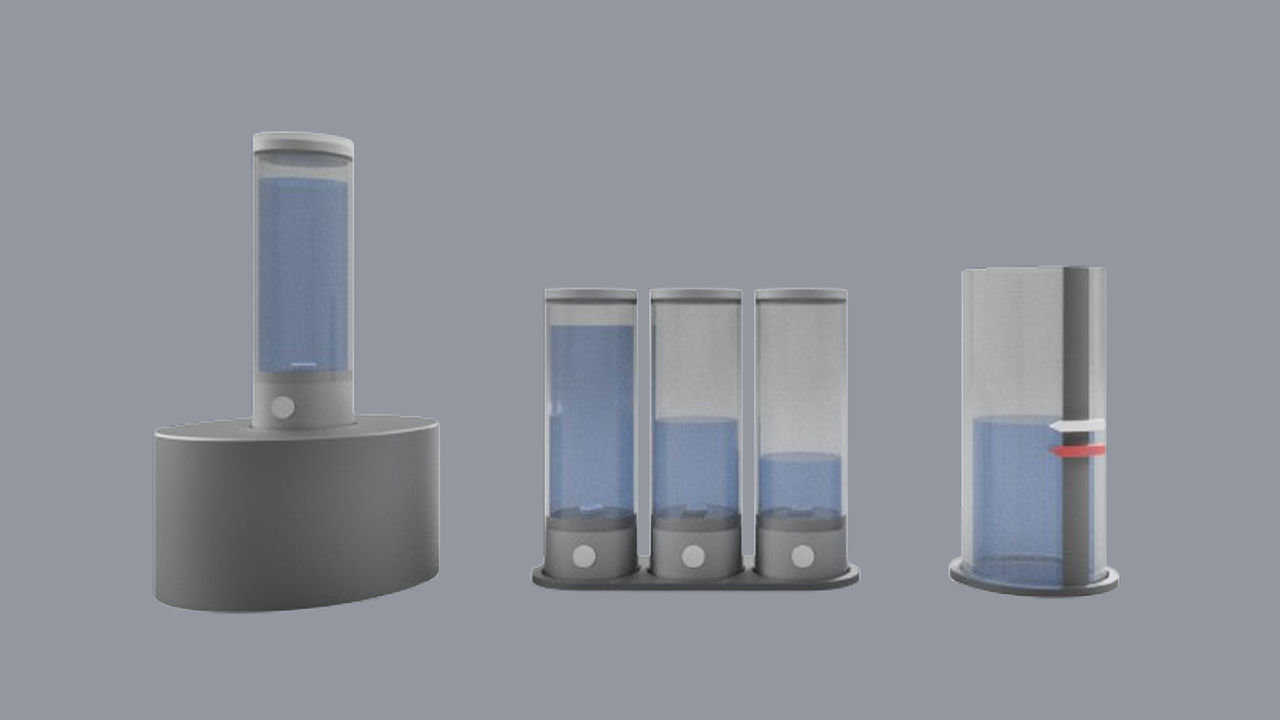
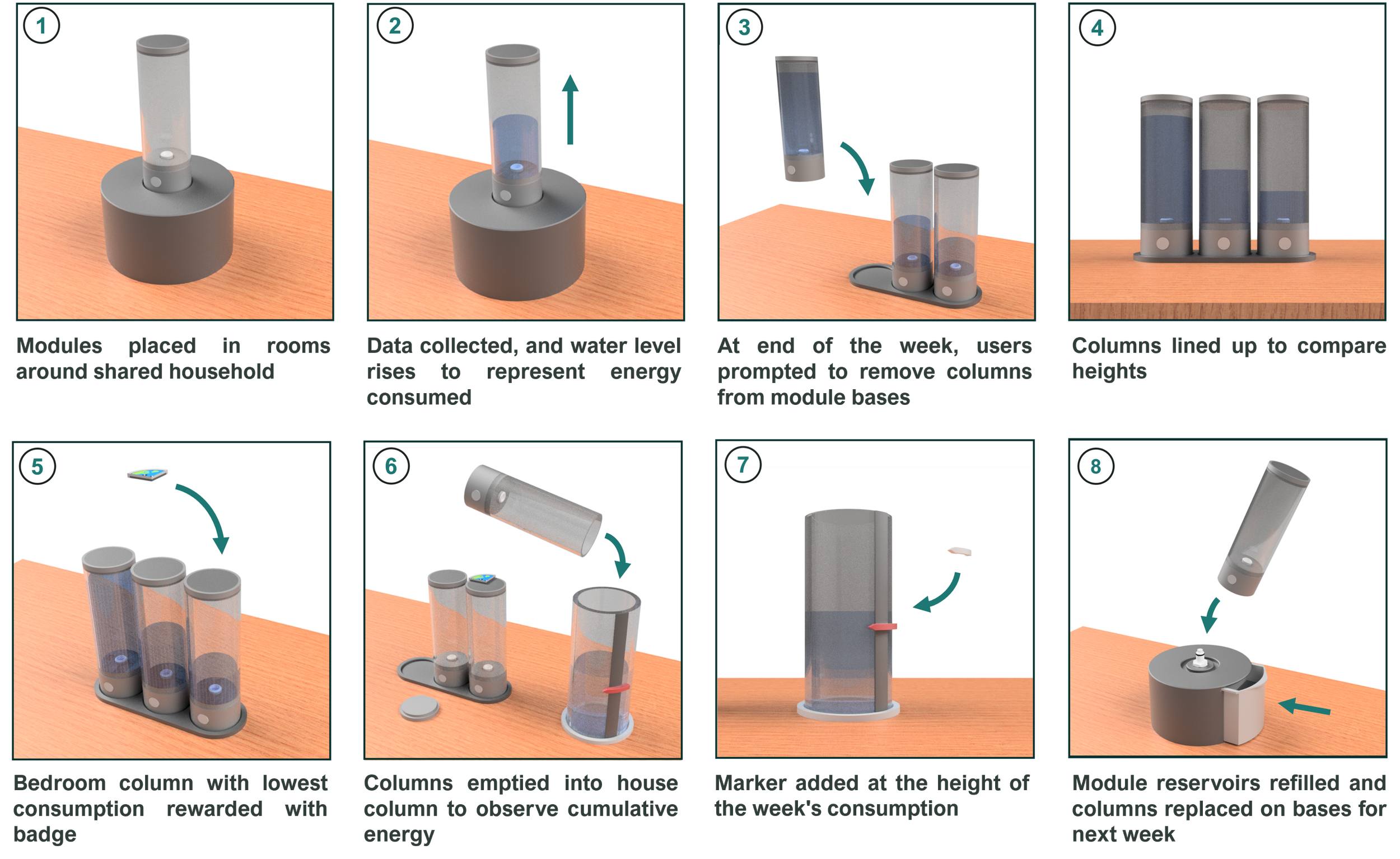
For my final-year Major Individual Design Project, I designed and prototyped a physical system to help shared households better understand their energy use. The ‘energy columns’ show room-by-room consumption through rising water levels, aligning for comparison and combining into a total household view.
Problem
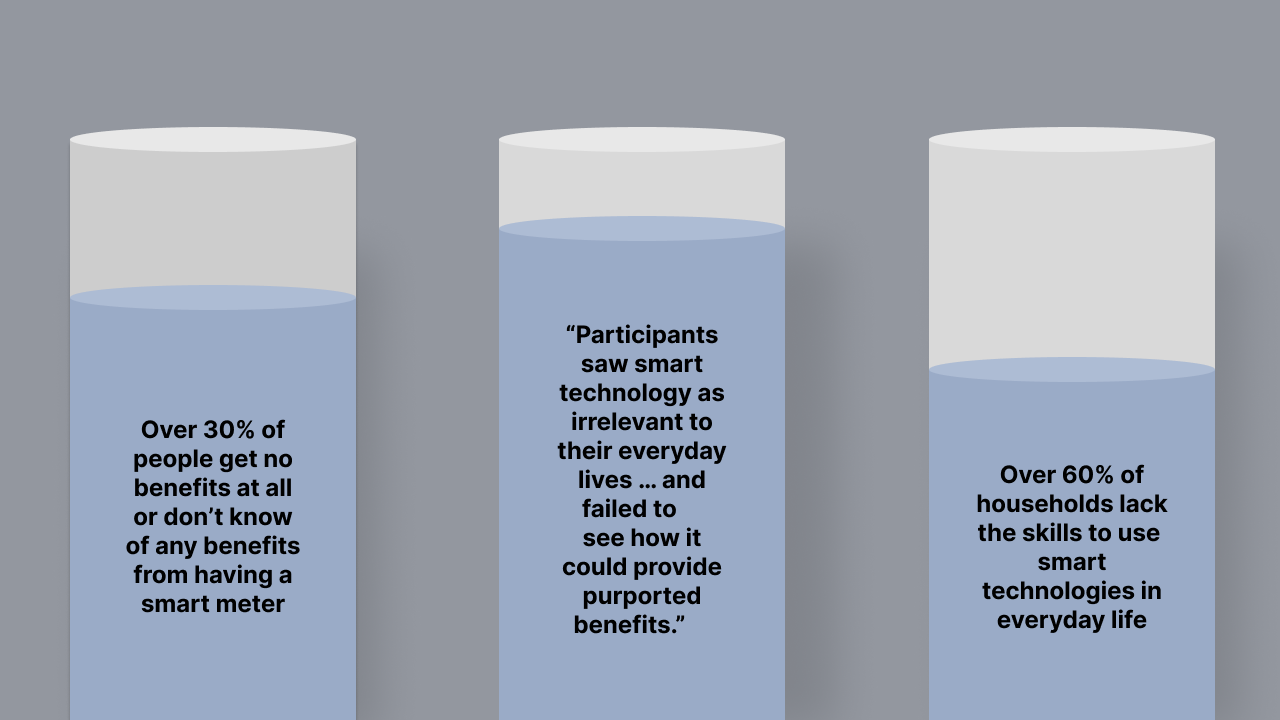
While smart meters and apps aim to make energy use visible, many households fail to see their relevance or engage with them.
❗This leads to inefficient energy habits and missed opportunities for saving.
Solution
The ‘energy column’ creates a more engaging, tangible way to understand energy use. As an interactive system, it encourages shared awareness and discussion in a way screens often fail to do.
✅ Improved engagement compared to traditional screens
Process
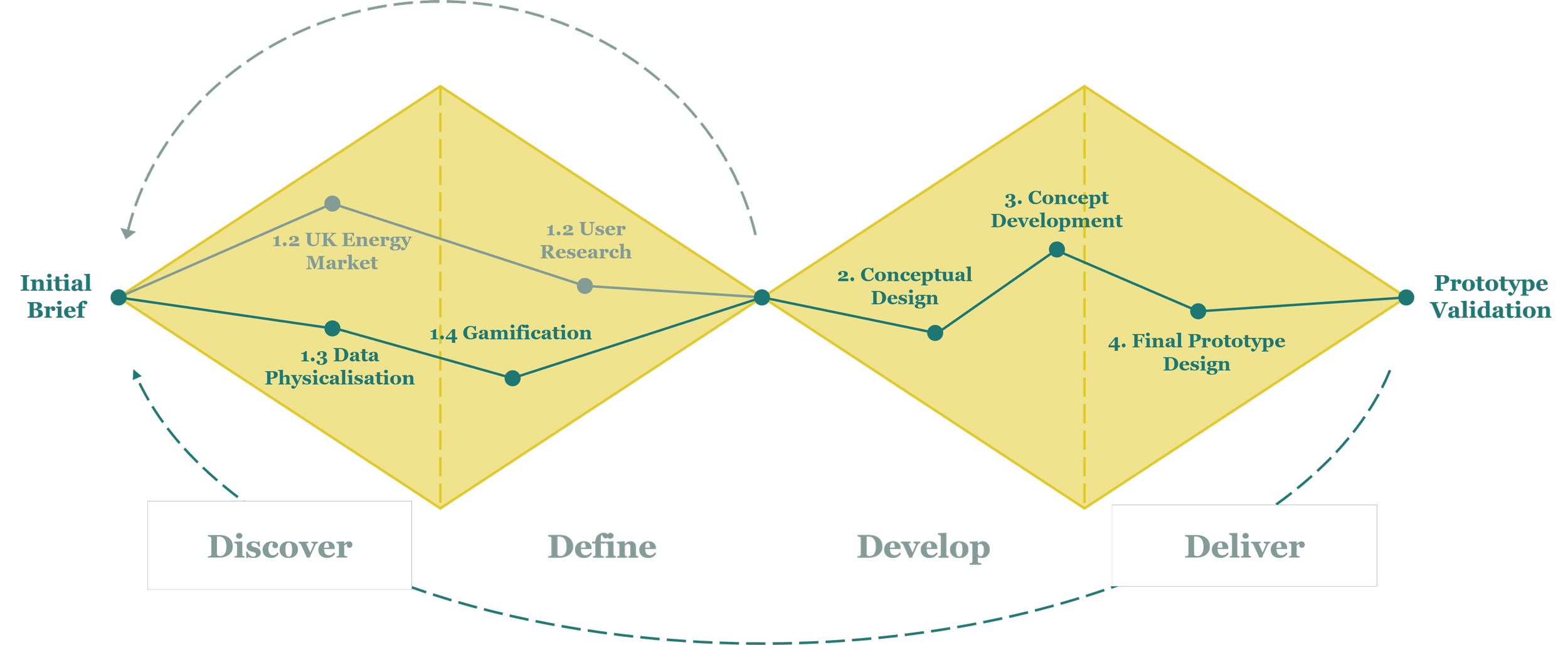
I followed a double diamond process, from early user research to low-fidelity prototypes, technical development, and user testing. The project explored how data physicalisation could make household energy use more understandable and engaging, while exploring practical implementation challenges.
User Research
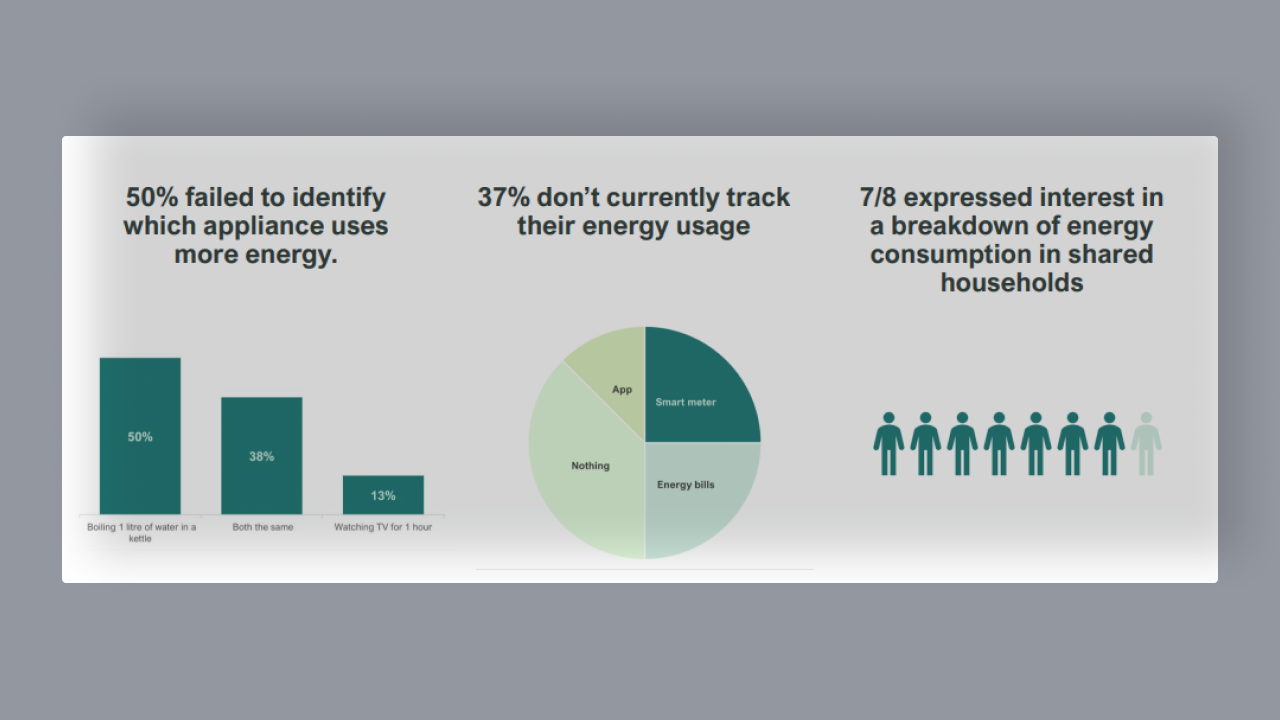
I researched household energy habits through two week-long energy diaries and a survey of young adults in shared accommodation, uncovering gaps in engagement and motivation.
Low-Fidelity Prototyping
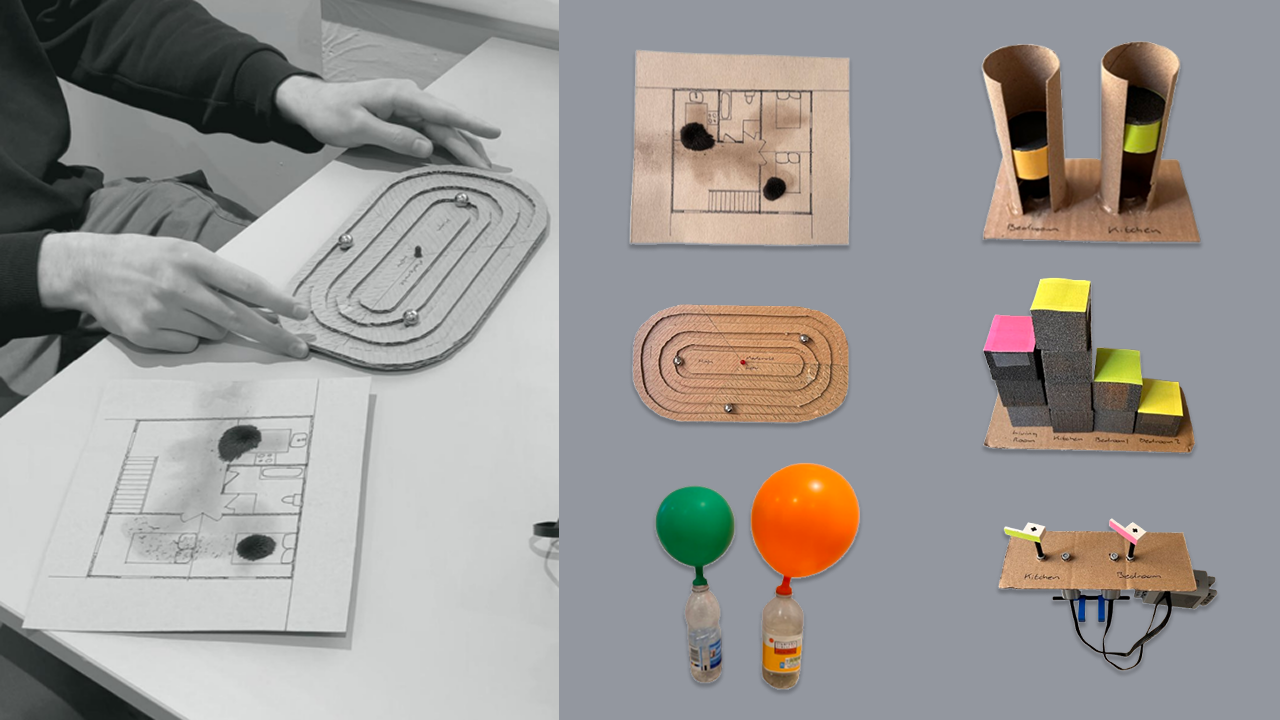
I built and tested several low-fidelity prototypes to explore interactive ways of communicating energy use, observing how participants responded to different physical cues.
Prototype Technical Design
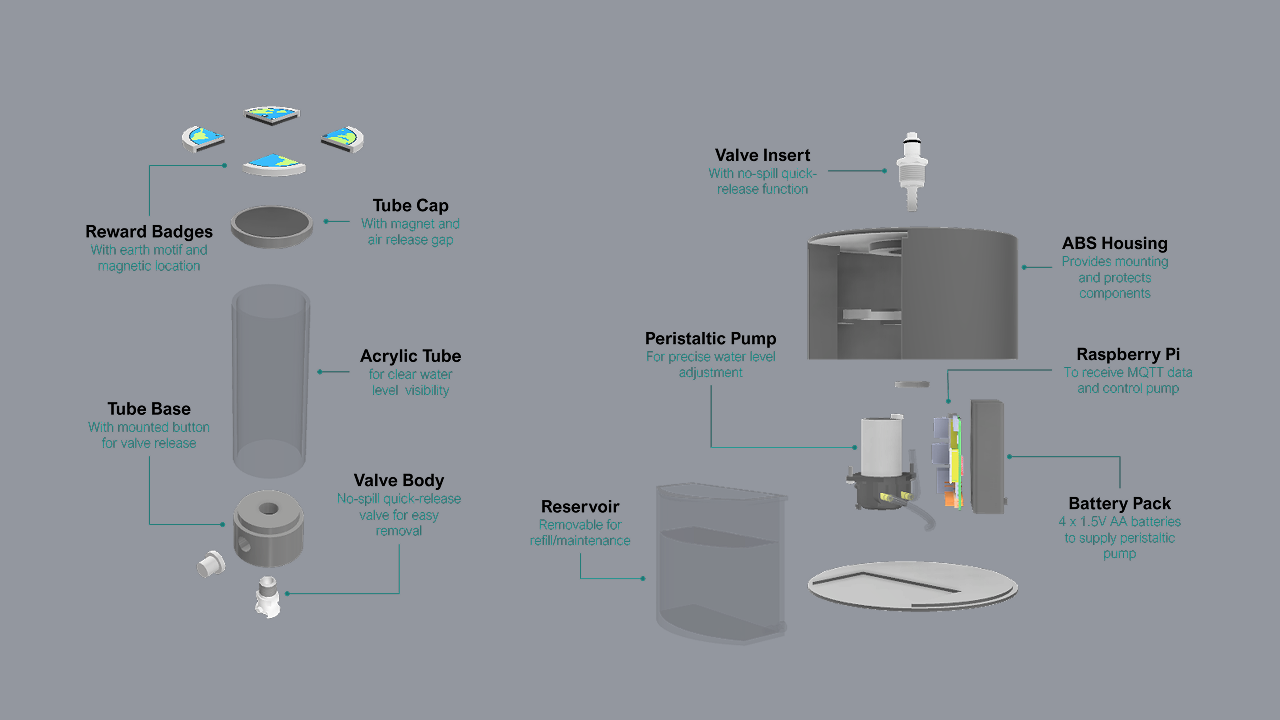
I developed a functional prototype combining off-the-shelf parts with bespoke components. A Raspberry Pi received live data from a smart plug and activated a peristaltic pump to raise the water level making invisible consumption visible in real time.
User Testing
I tested the prototype through a passive observation session (to gauge emotional and cognitive impact) and comparative evaluation (measuring clarity against a digital display). Findings showed the column effectively conveyed relative energy use and prompted reflection during everyday activities.